
Archmage Idle
TopCogSimulation
4.7125.00 Reviews
- Version
- 2.0.6
- Installs
- 50.00K
- Age Rating
- Everyone
Screenshots
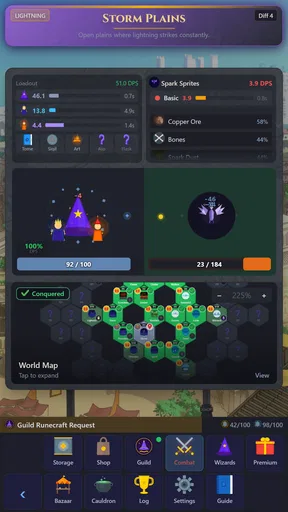
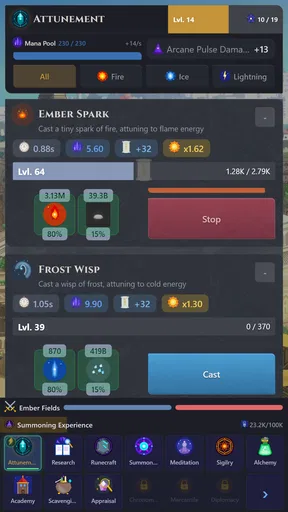

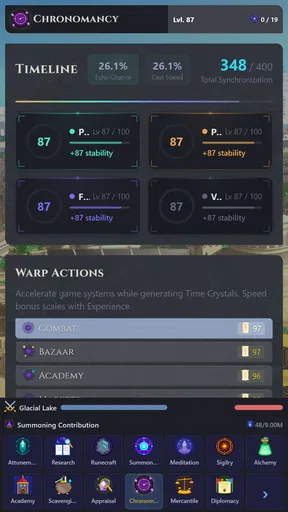
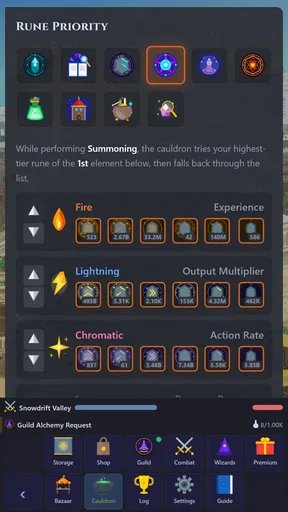
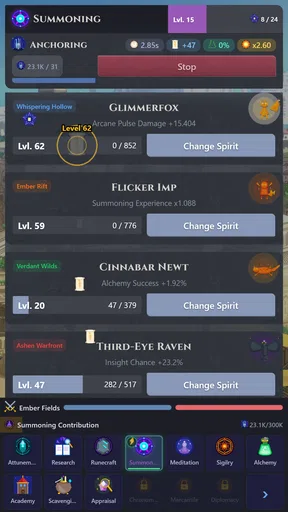
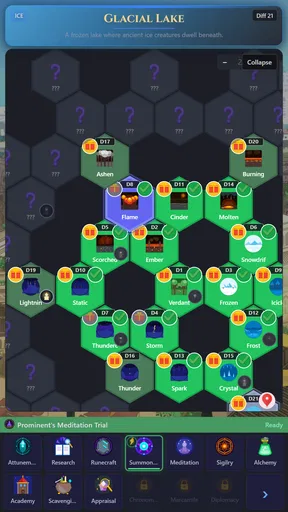
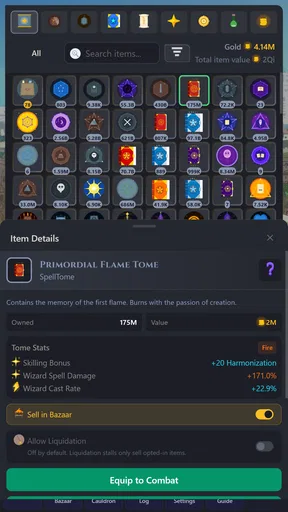
Our Review of Archmage Idle
 Analysis by Appyee
I approached Archmage Idle expecting a light fantasy game I could check between other tasks, and that is exactly where it works best. It puts me in charge of a wizard guild as its archmage, then turns the usual training, upgrading, and resource-building loop into an incremental role-playing experience. I can make progress without playing constantly, but there is still enough to think about when I return that it does not feel like a completely automatic number generator.
That balance is the main reason I would recommend it to someone who enjoys simulation games with an RPG flavor. It is free to start, rated for Everyone, and developed by TopCog. The Android listing shows a 4.6 average from around 1.3 thousand ratings, with more than 50 thousand installs, so it has already found a modest audience without presenting itself as a huge mainstream production. The current version is 2.0.6, and it runs on Android 7.0 or later.
How I built a reliable daily routine
The most useful way to play is not to treat every visit as a long session. I get better results by separating the game into three small moments: collect what has accumulated, spend resources with a purpose, and leave the guild in a state that can continue working while I am away. That routine sounds simple, but it prevents the most common idle-game mistake: opening the app repeatedly without knowing what the next upgrade is supposed to accomplish.
My first check is the overall state of the guild. I look at what has accumulated, which improvement is closest, and whether a purchase will increase future progress or merely make the current screen look stronger. In an incremental RPG, the most attractive button is not always the best button. A modest upgrade that improves the next cycle can be more valuable than an expensive improvement that takes a long time to repay itself.
I also found it helpful to decide whether a visit is for maintenance or for active progress. During a maintenance visit, I collect and make one or two sensible purchases before closing the game. During a progress visit, I stay longer and compare several upgrade choices instead of spending immediately. Keeping those purposes separate makes the experience calmer and reduces wasteful tapping.
A realistic everyday scenario is a short morning check before work or school. I collect the guild’s accumulated output, use the available resources on the upgrade that supports my current bottleneck, and close the game. Later, perhaps during a break, I return with a clearer goal. This is more satisfying than trying to force a full session when the design is clearly built around gradual progress.
The role-playing layer gives that routine a little more personality than a plain production simulator. I am not only watching a counter rise; I am managing the growth of a magical organization. That framing matters because it gives each return a sense of continuity. Still, players looking for a story-heavy adventure should adjust their expectations. The appeal is the management loop and the feeling of steady development, not a cinematic campaign.
What I prioritize when resources are tight
When progress slows, I avoid spreading resources across every available option. I choose one immediate objective and let the rest wait. That might mean strengthening the part of the guild that is holding back the next improvement, or saving for a threshold that unlocks a more meaningful step forward. The exact choice depends on the current state of a run, but the principle stays useful: spend to remove a bottleneck, not simply because a button is available.
This approach is especially helpful for new players because idle games can make every upgrade look equally urgent. It is not. If an upgrade does not change what I can do during the next few visits, I usually delay it. The game becomes easier to read once I judge purchases by their effect on the next cycle rather than by their price or visual prominence.
I also recommend leaving a small reserve instead of emptying the resource pool every time. That reserve gives me flexibility when I return and discover that a more useful improvement is within reach. Spending everything can create a frustrating pause, while keeping a little back makes the next session feel active.
Settings and controls worth checking early
Before settling into a routine, I check the available settings and interface controls. I do not change options just for the sake of changing them; I look for anything that affects notifications, sound, display comfort, or how quickly I can move through repeated actions. Idle games are often opened in places where silence and low distraction matter, so a comfortable setup can make a bigger difference than a small optimization.
I prefer to decide early whether I want reminders at all. Notifications can be useful when I enjoy returning at a particular point, but they can also turn a relaxed game into another source of interruptions. If I am using the game as a quiet break, I keep the experience unobtrusive. If I am actively following a growth target, reminders may help me maintain the habit without repeatedly checking at random.
Sound is another practical choice. The fantasy theme can be more enjoyable with audio, but I often play in shared spaces and prefer a silent session. The important point is that the game should fit around my day rather than demand that my day fit around it. Checking these options before playing regularly avoids the small annoyances that otherwise make an idle title feel less polished.
I also pay attention to whether an action needs confirmation before spending a valuable resource. When a game contains many repeatable upgrades, fast tapping can lead to purchases I did not intend. My habit is to slow down around expensive choices and use quick actions only for routine collection or clearly planned improvements. That is not glamorous advice, but it protects long-term progress.
The current version, 2.0.6, is worth noting when troubleshooting a behavior or comparing impressions with another player. Version details can explain why two people describe slightly different interfaces or pacing. I would not judge the whole game from a single short session after an update; incremental systems often reveal their strengths only after the opening rewards stop arriving so quickly.
Faster patterns that still leave room for decisions
Experienced idle players often develop a repeatable sequence, and I found that Archmage Idle benefits from one. Mine is collect, inspect the next target, compare the likely payoff, purchase deliberately, and then leave. The sequence is fast because it removes hesitation, but it does not turn the game into mindless button pressing. The decision remains in the middle: which improvement deserves the resources right now?
Another useful pattern is to group active play into short bursts. Instead of opening the game every few minutes, I make several decisions in one visit and then let the guild run. This reduces the feeling that I am babysitting the app. It also makes the difference between an idle RPG and a conventional action game clearer: the reward comes from planning a good interval, not from maintaining constant physical input.
When I am testing a new strategy, I change one priority at a time. If I purchase several unrelated improvements together, I cannot tell which one actually helped. By focusing on a single objective for a few cycles, I get a better sense of whether I am improving the guild or merely spending faster. This is a particularly useful habit for players who enjoy optimization but do not want to keep notes or calculate every outcome.
I would also avoid making purchases immediately after returning from a long absence. First I look at the accumulated result and the available choices. The return screen can create a strong urge to spend because it feels like a reward moment, but waiting briefly lets me compare the next steps with a clearer head. That small pause has saved me from choosing upgrades that looked exciting but did little for my actual plan.
The game is well suited to people who like progress they can check in small pieces. It can fit alongside commuting, waiting rooms, or a short evening wind-down, provided the player is comfortable with gradual advancement. It is less suitable for someone who wants every session to deliver a dramatic event, a demanding tactical battle, or a large amount of new content. The pleasure here is cumulative rather than explosive.
Where the free model changes the experience
Archmage Idle is free to download and play, but it includes in-app purchases ranging from $0.99 to $19.99 per item. That matters because idle games naturally create moments when paying can seem tempting: progress slows, a desirable improvement is close, or a shortcut promises to reduce waiting. I recommend deciding in advance whether I am playing entirely without purchases or allowing myself a fixed limit. Making that decision before the pressure appears keeps the game from quietly changing its role.
I do not think the presence of purchases automatically undermines the experience. The free entry makes it easy to test whether the loop suits me, and a player who enjoys slow development may not need to spend at all. The friction appears when I want rapid progress but do not want to pay. At that point, the game’s deliberate pacing can feel less like a relaxing rhythm and more like a barrier.
For that reason, I would not recommend it to a player who dislikes waiting mechanics in any form. A traditional role-playing game may be a better choice if you want to earn power mainly through active battles and exploration. A deeper management simulator may also be preferable if you want detailed production chains, staff scheduling, or extensive economic control. Archmage Idle sits between those styles: lighter than a full management game and more structured than a purely passive counter.
The age rating of Everyone makes it approachable for a broad audience, but accessibility of theme does not mean every player will enjoy the design. Younger players may need guidance around optional spending, while adults who are sensitive to recurring prompts should review their purchasing habits before settling in. The game is easy to understand at a basic level, yet the best results still come from restraint.
Advanced limits and the point where optimization stops helping
There is a limit to how much efficiency I want to extract from a game like this. Once I have a stable routine, the difference between a good decision and a perfect decision may not justify constant checking. I get more enjoyment by identifying the largest current bottleneck and moving on than by calculating every possible upgrade path. That is an important trade-off: optimization can improve progress, but excessive analysis can remove the relaxation that brought me to an idle game.
The main advanced limitation is that gradual systems can feel repetitive after the novelty of the guild fantasy fades. The same collection-and-upgrade rhythm is the foundation, so players who need frequent mechanical surprises may eventually lose interest. I see that as a design boundary rather than a flaw to hide. The game works when I want a dependable background progression loop; it is not the right tool when I want constant reinvention.
I also notice that idle progress can make the value of a session difficult to judge. A good visit may consist of only a few decisions, and that can feel underwhelming if I measure fun by minutes played. I have to judge it by whether the guild is in a better position when I leave. Once I accept that, short sessions feel intentional instead of incomplete.
Another limit is attention. The game is convenient because it does not require continuous play, but that convenience can encourage checking too often. If I open it out of habit without a clear reason, the experience becomes a loop of collecting and closing. My solution is simple: I return when I have a target, not merely because the app is available. That habit preserves the strategic part of the game.
Players wondering whether their device is supported should find the Android requirement manageable, since the game supports Android 7.0 and later. That does not guarantee identical comfort on every phone, but it does make the entry point broad. I would still judge the interface on the device I plan to use, especially if small controls or frequent reading are uncomfortable for me.
Who will get the most from this wizard-guild simulator?
I think the strongest audience is someone who enjoys incremental RPGs but wants a gentler pace than an action-focused title. You should like seeing a long-term project grow, making occasional choices, and returning to a familiar fantasy setting. The game is also a good fit for players who want something that can be played in short visits without losing all sense of progress between them.
It is a weaker match for competitive players who need direct opposition, for story enthusiasts seeking substantial character drama, and for simulation fans who expect highly detailed control over every part of an organization. It may also disappoint anyone who wants a completely hands-off experience, because the best progress still depends on choosing upgrades thoughtfully. The game reduces the workload; it does not remove decision-making altogether.
Compared with a standard idle clicker, the guild-and-archmage framing gives the progress a clearer role-playing identity. Compared with a conventional RPG, it asks for far less moment-to-moment attention. Compared with a complex management simulator, it is easier to enter but offers less room for elaborate planning. Those comparisons explain its appeal better than calling it simply relaxing: it is a focused middle ground.
TopCog has kept the concept clear enough that I can understand the basic loop quickly, yet the game rewards players who stop treating every reward as an instruction to spend. That is the central skill I carried from beginner play into a more efficient routine. The strongest improvement was not tapping faster; it was learning to leave the guild prepared for the next return.
After spending time with it, my verdict is positive but specific. Archmage Idle is best enjoyed as a small daily management habit, not as a game that must fill an entire evening. Its free entry, accessible fantasy setting, and incremental RPG structure make it easy to try, while the optional purchases and repetitive pacing give good reasons to play with boundaries.
I would recommend it to a friend who wants a low-pressure wizard-guild simulator with enough choices to make progress feel earned. I would suggest skipping it in favor of an active RPG or a deeper strategy game if waiting and gradual upgrades already sound tiring. For the right player, the satisfying moment is not a spectacular battle; it is returning to a better-prepared guild, making one smart investment, and knowing the next stretch of progress is already underway.
Verdict
Strengths of Archmage Idle
- Simple idle gameplay that progresses even during offline periods.
- Large variety of heroes, spells, and upgrades to experiment with.
- Short sessions make it convenient for casual mobile gaming.
- Fantasy visuals and effects give battles a pleasant presentation.
- Regular rewards help free players maintain steady progress.
Limitations of Archmage Idle
- Progress can slow noticeably without frequent upgrades or stronger heroes.
- Randomized rewards may make specific character upgrades difficult to obtain.
- Combat is mostly automated, offering limited control during battles.
- The interface can feel crowded as more systems unlock over time.
- Ads or in-app purchases may be needed to speed up progression.
Similar Picks in This Category
View All
Truckers of Europe 3
Wanda Software4.3

Town Building Life Simulator
XGame Global4.2

Fidget Toys Trading・Pop It 3D
Freeplay Inc4.7

Sculpt People
CrazyLabs LTD4.4

Scary Teacher 3D
Z & K Games4.2

Hair Tattoo: Barber Shop Game
CASUAL AZUR GAMES4.3
Frequently Asked Questions
What is Archmage Idle, and how does its gameplay work?
Archmage Idle is an idle role-playing game focused on developing a powerful mage through automated battles, character upgrades, equipment, skills, and progression systems. Your hero continues earning rewards while you are away, but you still need to choose upgrades, improve abilities, manage resources, and prepare for more difficult stages. It is designed for players who enjoy gradual progress without constant manual control.
Can I play Archmage Idle without an internet connection?
Archmage Idle may require an internet connection for certain features, including account synchronization, advertisements, events, cloud saves, purchases, and reward verification. Some parts of the main progression may work temporarily offline, depending on the version and device, but offline availability should not be assumed. Players should connect regularly to ensure rewards and progress are properly recorded.
Does Archmage Idle include in-app purchases or advertisements?
Like many free-to-play idle RPGs, Archmage Idle can include optional in-app purchases and advertising-based rewards. These may provide extra resources, faster progression, special items, or convenience features, while normal gameplay remains available without spending money. However, progress can feel slower for non-paying players, so it is worth checking the store, event rewards, and purchase settings before committing to the game.
Is Archmage Idle suitable for beginners and casual players?
Archmage Idle is generally approachable for beginners because its automated combat and gradual tutorial-style progression make the basic systems easy to understand. Casual players can log in briefly to collect rewards, upgrade the mage, and begin new battles. Nevertheless, the game may introduce several currencies, equipment choices, and upgrade paths over time, so players who want optimal progress will need to learn how these systems work.
What devices are recommended for playing Archmage Idle smoothly?
Archmage Idle is built for mobile devices and should run comfortably on many modern Android and iOS phones or tablets. Performance can vary according to the device, operating-system version, available storage, memory, and background applications. Before downloading, make sure your phone has enough free space and uses a supported system version. Older devices may experience slower loading, battery drain, or reduced performance during extended sessions.
Play our best games!


